
The Nike Story
Origins: The Crazy Idea
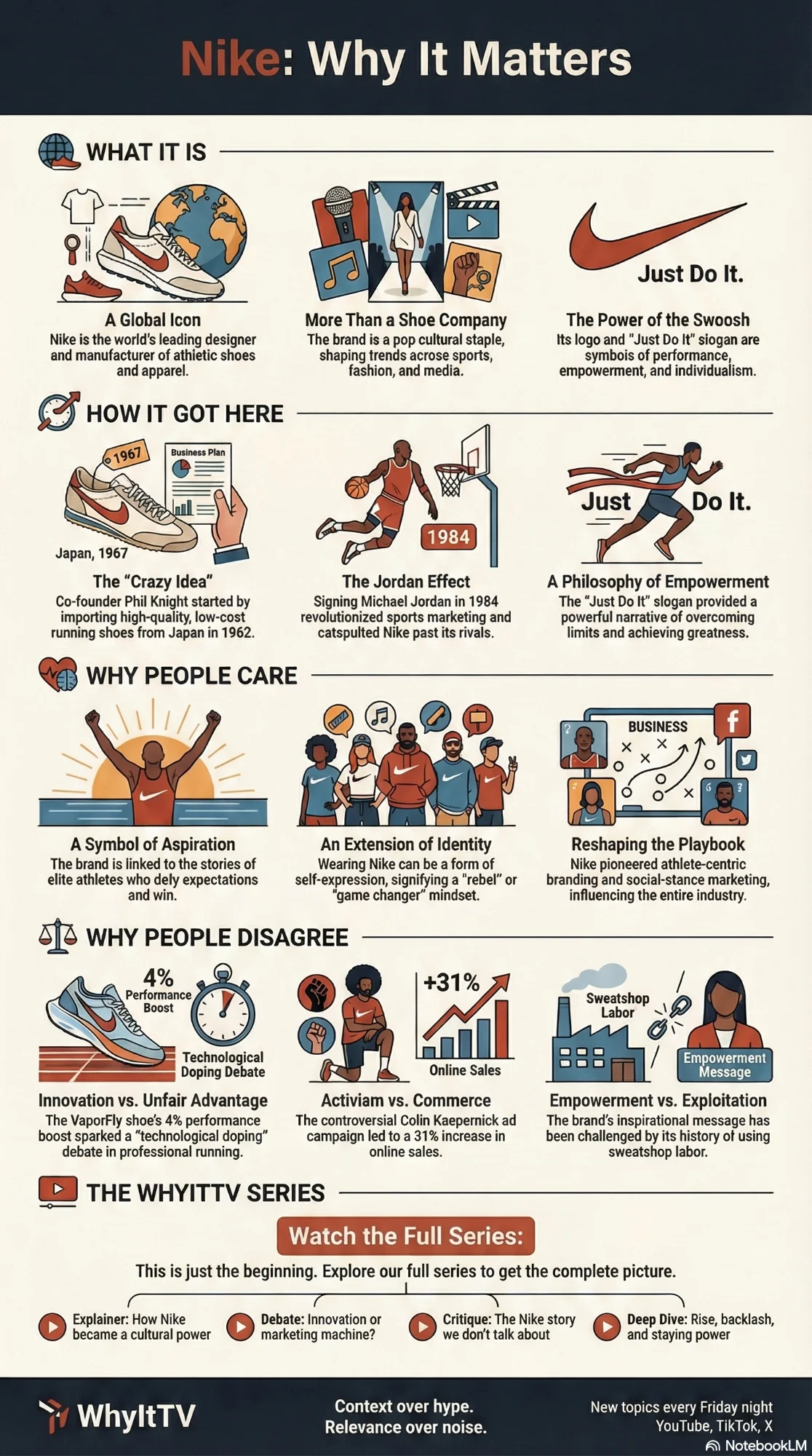
Nike didn't start as Nike. In 1964, Phil Knight—a middle-distance runner from Oregon—and his former track coach Bill Bowerman founded Blue Ribbon Sports with a simple premise: import high-quality, low-cost running shoes from Japan and sell them in America.
Knight's "crazy idea" came from a paper he wrote at Stanford Business School. He noticed that Japanese cameras had disrupted the German camera market with lower prices and comparable quality. Could Japanese running shoes do the same to German athletic footwear, dominated by Adidas and Puma?
He flew to Japan, struck a deal with Onitsuka Tiger (now ASICS), and began selling shoes from the trunk of his Plymouth Valiant at track meets. It wasn't glamorous. But it worked.
The Swoosh and the Pivot
By 1971, the relationship with Onitsuka was fraying. Knight and Bowerman decided to manufacture their own shoes. They needed a name and a logo—fast.
Carolyn Davidson, a graphic design student at Portland State, designed the Swoosh for $35. Knight reportedly said he didn't love it, but he'd "grow into it." The name Nike—after the Greek goddess of victory—came from employee Jeff Johnson, who dreamed it the night before the deadline.
The Swoosh would become one of the most recognized symbols on Earth. Davidson later received Nike stock that would be worth over $600,000.
The Jordan Effect
Nike's transformation from shoe company to cultural powerhouse began in 1984 with a rookie basketball player named Michael Jordan. Against his preference for Adidas, Jordan signed with Nike for $500,000 annually plus royalties—an unprecedented deal for an unproven player.
The Air Jordan line didn't just sell shoes. It created a new category: the athlete as brand, the sneaker as status symbol, the shoe as cultural artifact. When Jordan wore banned sneakers (Nike paid the fines), it generated more publicity than any ad campaign could buy.
Just Do It
In 1988, Nike launched the "Just Do It" campaign. The phrase, reportedly inspired by the last words of a death row inmate, became more than a tagline—it became a philosophy. Nike wasn't selling shoes anymore. It was selling possibility, aspiration, and the idea that anyone could be an athlete.
This positioning allowed Nike to transcend sports. It became fashion. It became culture. It became identity.
The Shadow Side
Nike's rise wasn't without controversy. Throughout the 1990s and 2000s, the company faced intense criticism over labor conditions in overseas factories. Reports of sweatshops, child labor, and poverty wages sparked protests and boycotts. Nike initially dismissed the criticism, then slowly acknowledged problems and implemented reforms.
More recently, Nike's 2018 Colin Kaepernick campaign—"Believe in something. Even if it means sacrificing everything."—sparked both praise and outrage, product burnings and soaring sales. Nike had learned that controversy, carefully managed, could be profitable.
Open Questions
As Nike approaches its seventh decade, questions remain. Can a company this large remain innovative? Are shoes like the Vaporfly—which provide measurable performance advantages—a form of "technological doping"? Can Nike reconcile its empowerment messaging with ongoing labor concerns? And in an era of direct-to-consumer brands and shifting cultural values, will the old playbook still work?
What's undeniable: Nike changed not just how we think about athletic footwear, but how we think about sports, branding, and the relationship between commerce and culture.