


The Levi's Story
Origins: Gold Rush Innovation
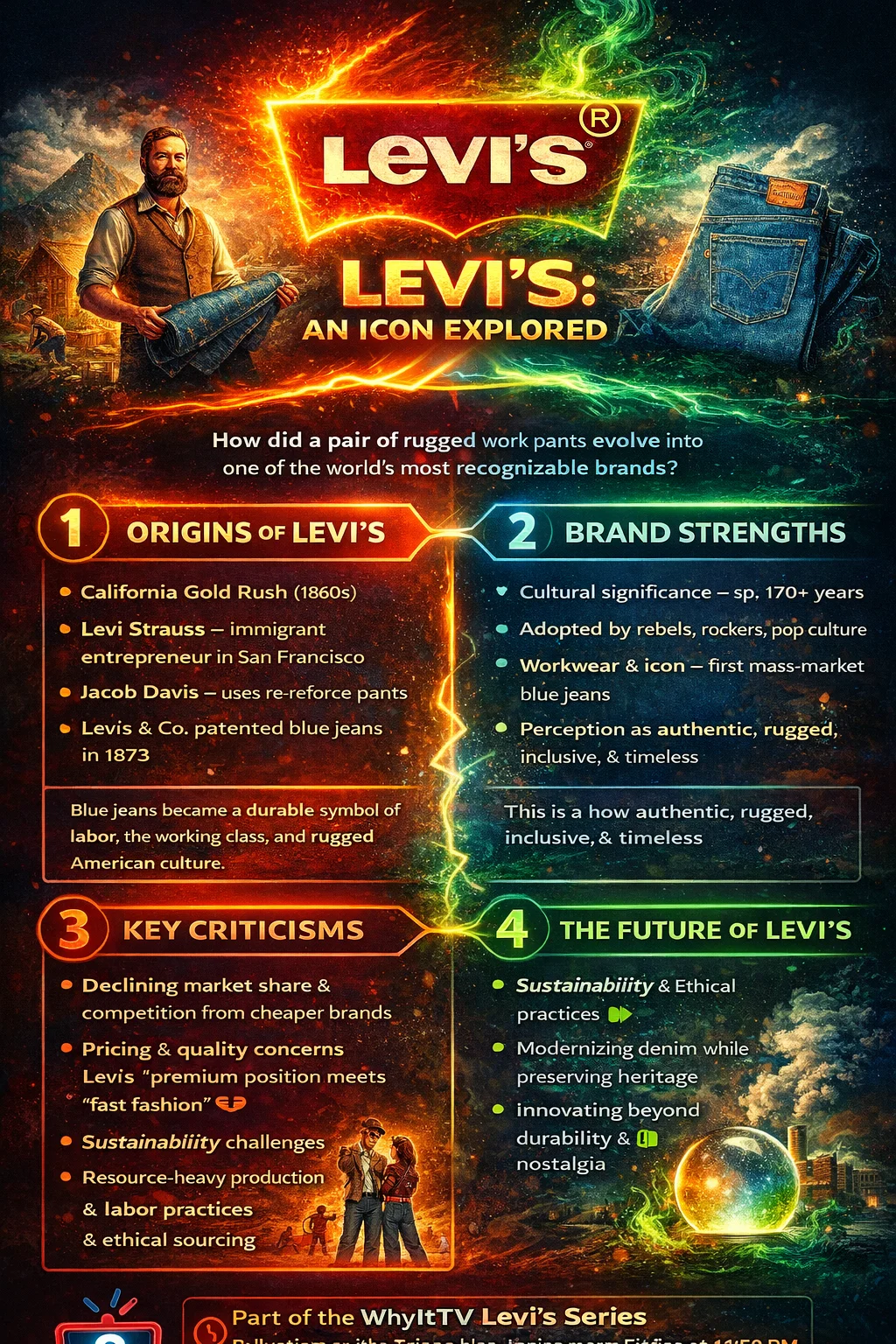
Levi Strauss didn't invent jeans—he invented a company that would come to define them. A German immigrant who arrived in San Francisco during the Gold Rush of the 1850s, Strauss initially sold dry goods to miners. The innovation came from a customer: Jacob Davis, a tailor who had discovered that copper rivets could reinforce the stress points of work pants.
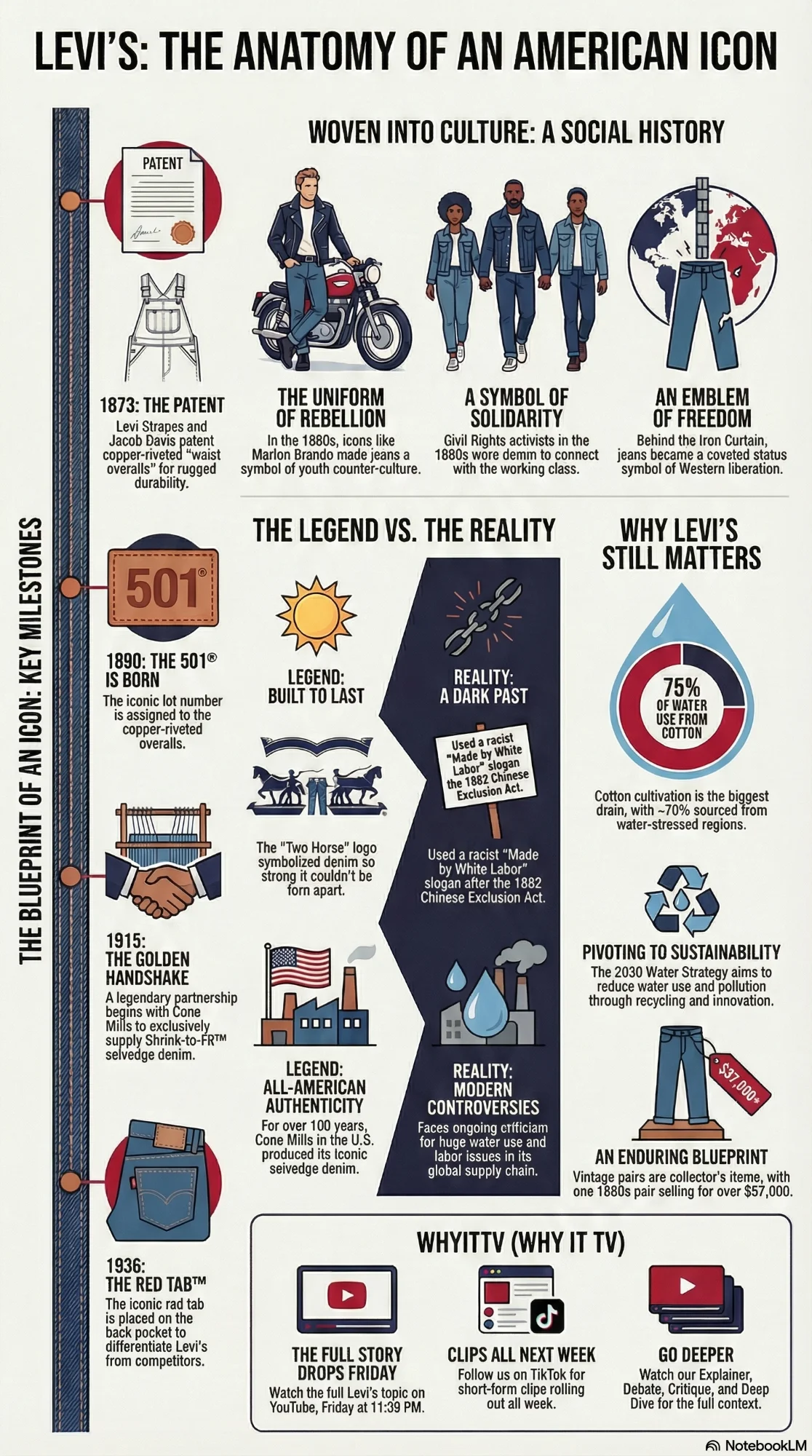
In 1873, Strauss and Davis patented the process together. The "waist overalls"—as they were originally called—weren't fashion. They were function: durable pants for people who worked hard and needed clothing that wouldn't fall apart.
From Workwear to Symbol
For decades, Levi's remained utilitarian—the uniform of laborers, cowboys, and farmers. The transformation began in the 1950s when Hollywood put jeans on rebels. Marlon Brando in "The Wild One," James Dean in "Rebel Without a Cause"—suddenly the same pants worn by ranch hands became symbols of youth defiance.
This wasn't marketing. It was cultural adoption. Levi's didn't create the rebel image; rebels chose Levi's. The company was smart enough to recognize what was happening and let it happen.
Global Uniform
By the 1960s and 70s, Levi's had become political. Behind the Iron Curtain, American jeans were contraband—a symbol of Western freedom that could fetch enormous prices on the black market. Civil Rights activists wore them as solidarity with working people. Hippies wore them as rejection of corporate conformity.
The same garment meant different things to different people, but it always meant something. That's rare for clothing.
The Modern Challenge
Today, Levi Strauss & Co. faces the contradictions of any heritage brand in a fast-fashion world. The company that built its reputation on durability operates in an industry driven by disposability. The jeans that symbolized authenticity are now made in factories worldwide, raising questions about labor and environmental impact.
Denim production is water-intensive—a single pair of jeans can require thousands of gallons. Levi's has invested in sustainability initiatives, but the scale of the challenge is significant.
Open Questions
Can a 170-year-old brand stay relevant without losing what made it meaningful? Can mass production coexist with authenticity? And in an era of athleisure and remote work, does denim still have a cultural role to play?
These questions don't have easy answers—which is what makes Levi's story worth exploring.