

The Coca-Cola Story
Origins: From Medicine to Mass Market
Coca-Cola began in 1886 as a patent medicine—a syrup invented by Atlanta pharmacist John Pemberton, sold at soda fountains for five cents a glass. The original formula contained coca leaf extract and kola nuts, promising to cure headaches and fatigue. It was one of many such tonics in post-Civil War America.
What transformed Coke from medicine to phenomenon wasn't the formula—it was the system. Asa Candler, who acquired the company in 1888, understood something crucial: the real business wasn't selling syrup. It was building a distribution network.
The Franchise Model
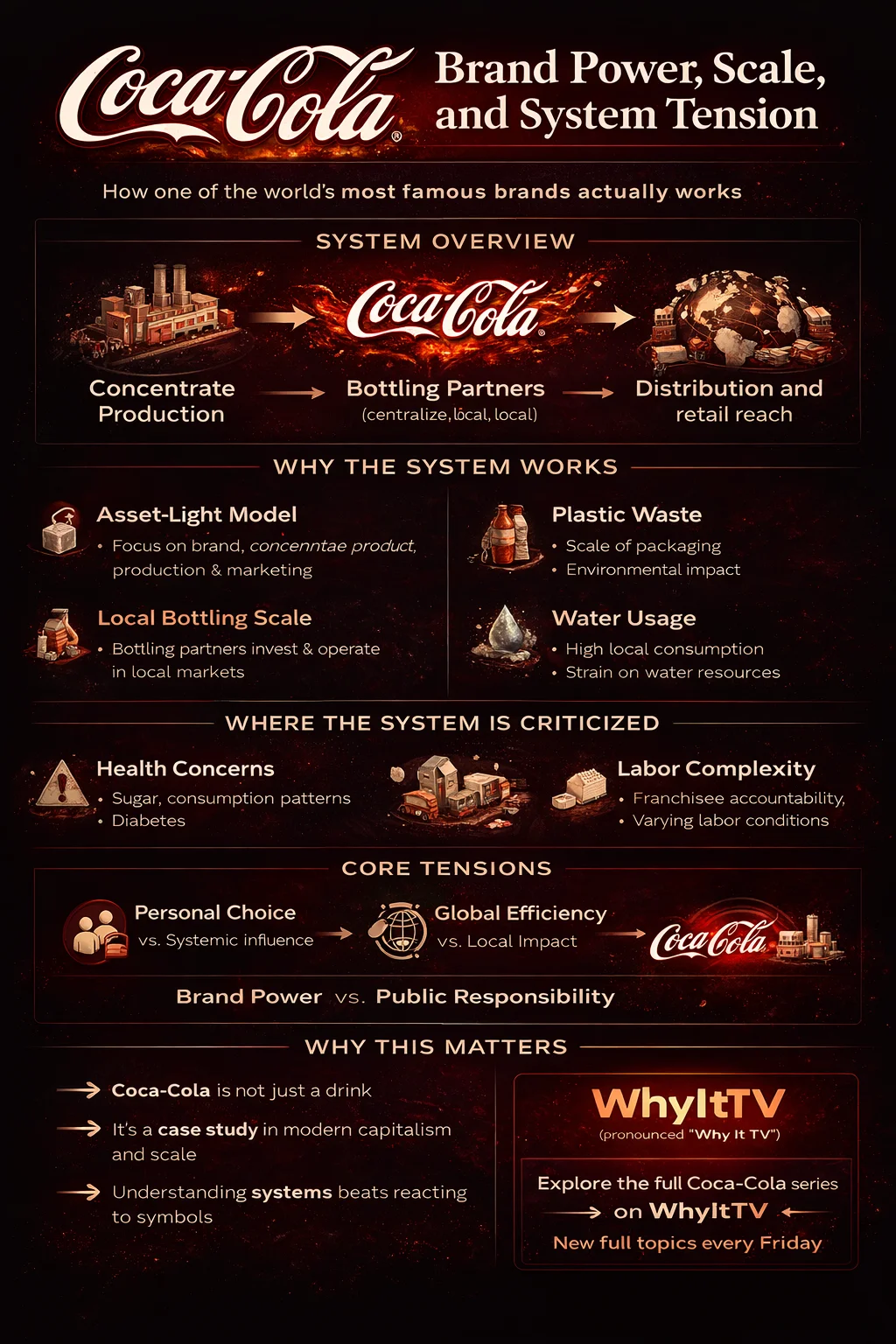
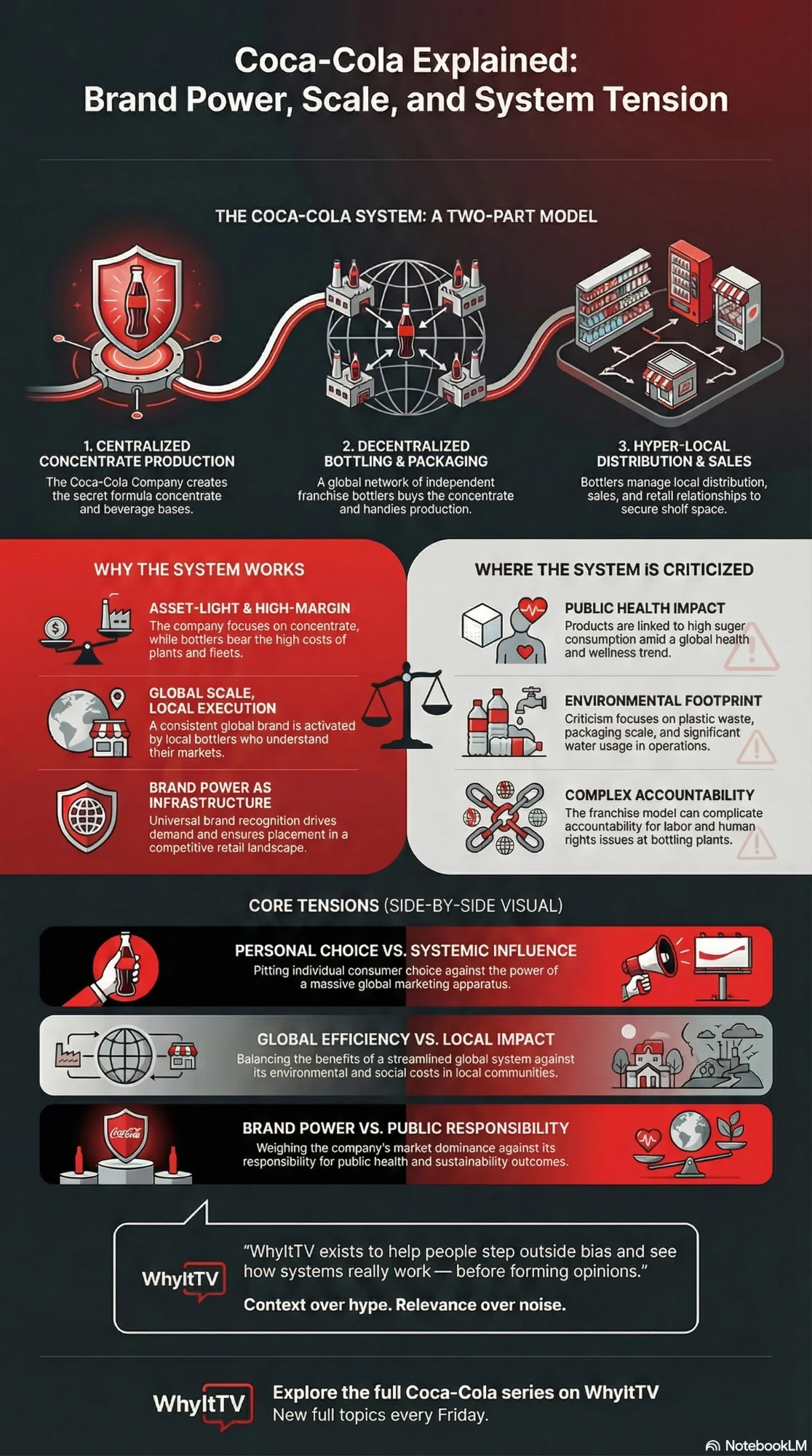
Coca-Cola's genius was the franchise bottling system, pioneered in 1899. The company would produce and protect the concentrate formula. Independent bottlers would invest in plants, trucks, and local distribution. This allowed Coke to scale globally without bearing the capital costs of building factories everywhere.
The model worked. By World War II, Coca-Cola was everywhere American soldiers went—the company received government support to set up bottling operations abroad, ostensibly for troop morale. After the war, those operations became the foundation of global expansion.
Brand as Infrastructure
Coca-Cola may be the purest example of brand power as competitive advantage. The formula itself isn't irreplaceable—blind taste tests famously showed many people prefer Pepsi. What Coke has built is infrastructure: not just distribution networks, but mental infrastructure. The script logo, the contour bottle, the red and white colors—these occupy space in human consciousness that no competitor can simply purchase.
This brand power creates flywheel effects. Retailers want Coke on shelves because customers expect it. Customers expect it because it's everywhere. It's everywhere because retailers want it.
The Tensions
Coca-Cola's scale creates tensions that can't be easily resolved. Public health advocates link sugary drinks to obesity and diabetes—and Coke is the category leader. Environmental critics point to plastic waste—Coke produces an estimated 3 million tons of plastic packaging annually. Labor advocates question conditions in the sprawling franchise network.
The company's responses—reduced-sugar options, recycling initiatives, supply chain audits—are real but incremental. The fundamental tension between selling more product and reducing harm remains.
Open Questions
What responsibility does a company bear for how its products are consumed? Is personal choice meaningful when marketing budgets exceed billions? Can a brand built on ubiquity adapt to a world increasingly skeptical of processed foods?
Coca-Cola isn't just a drink. It's a case study in modern capitalism—the power of systems, the reach of brands, and the complications that come with both.