
The Chevrolet Story
Origins: The Counterweight
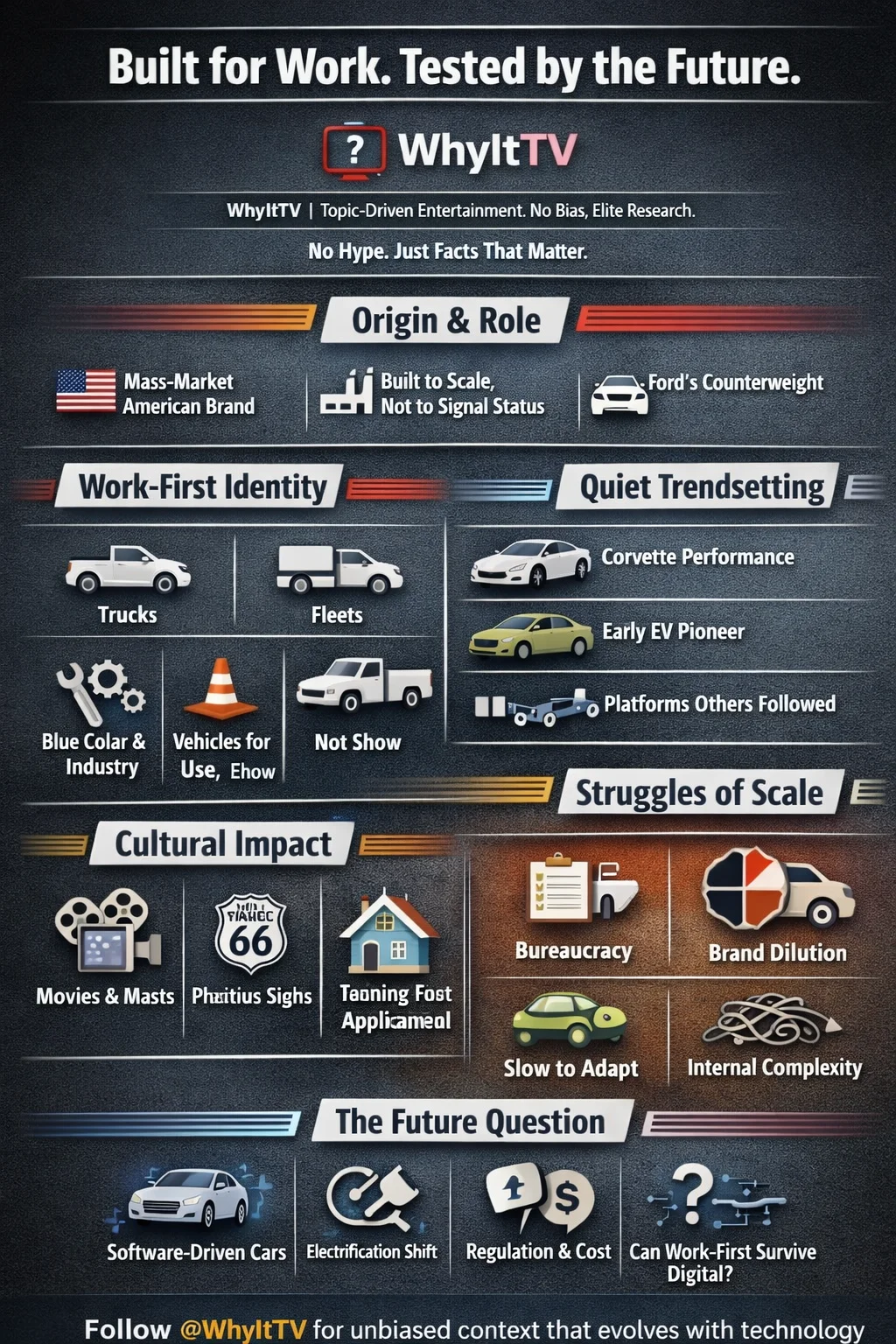
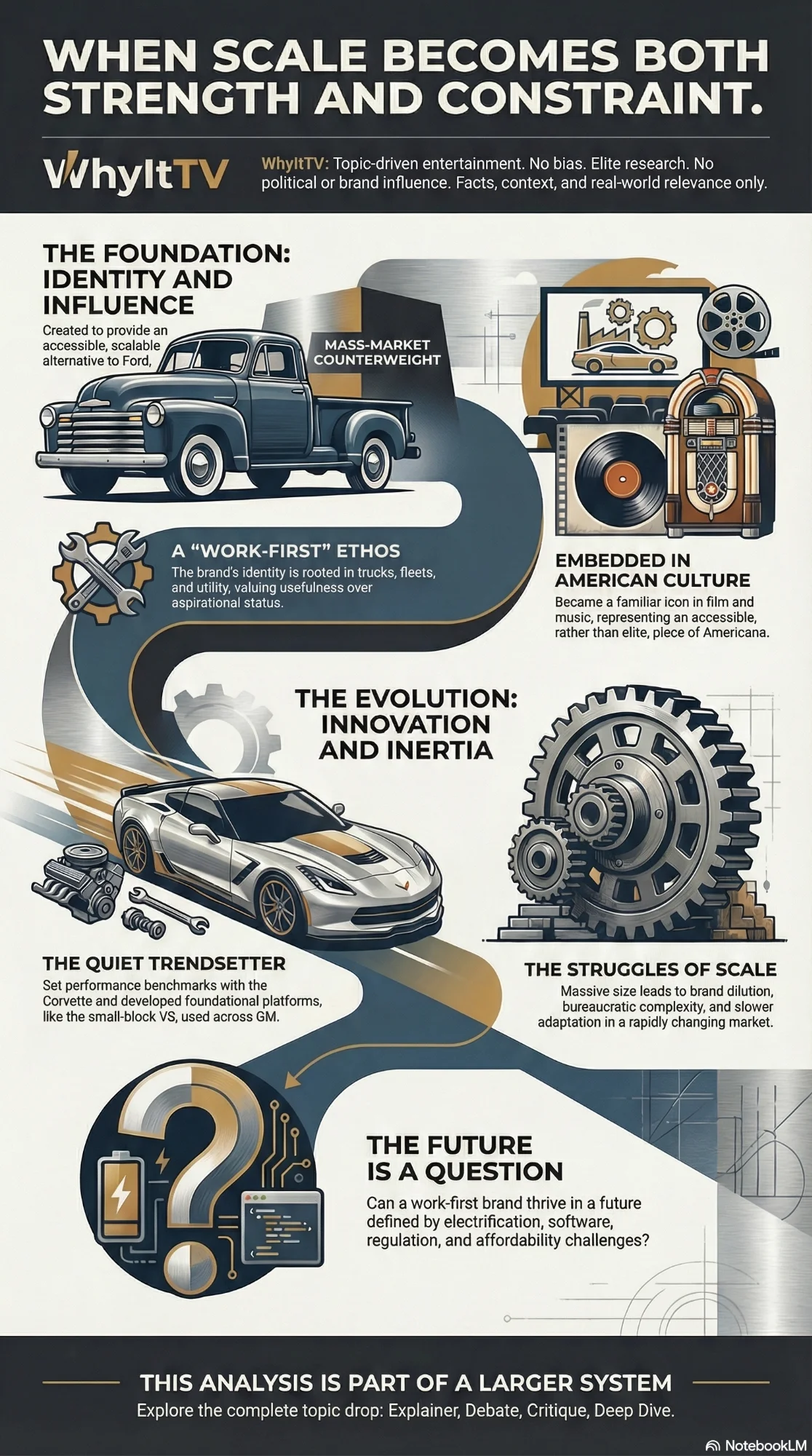
Chevrolet was born from competition—specifically, to compete with Ford. In 1911, William C. Durant (who had founded General Motors and been forced out) partnered with Swiss-born race car driver Louis Chevrolet to create a new automobile company. The goal: build a car that could challenge Ford's dominance of the American market.
Where Ford offered uniformity ("any color as long as it's black"), Chevrolet offered variety. Where Ford appealed to economy, Chevrolet added a touch more style and power. This positioning—accessible but aspirational—would define the brand for over a century.
The Work-First Identity
Chevrolet found its deepest identity not in sports cars but in trucks, fleets, and vehicles built for use rather than show. The Silverado became the workhorse of American construction sites. Fleet vehicles carried the bowtie emblem across the country. Blue-collar reliability became the brand's core promise.
This wasn't glamorous, but it was durable. While competitors chased status buyers, Chevrolet built relationships with people who needed vehicles that worked.
The Quiet Trendsetter
Despite its utilitarian image, Chevrolet has been responsible for genuine innovation. The Corvette, introduced in 1953, became America's sports car—a performance benchmark that proved American engineering could compete with European exotics. The small-block V8 engine became a foundational platform used across GM for decades.
And in electric vehicles, Chevrolet was surprisingly early. The Volt (2010) and Bolt (2016) weren't perfect, but they represented serious commitment to electrification years before it became an industry obsession.
The Struggles of Scale
Being part of General Motors has been both Chevrolet's strength and constraint. The resources of the world's largest automaker enabled massive production and distribution. But they also meant bureaucratic complexity, brand dilution across GM's many divisions, and slower adaptation to changing markets.
The 2008 financial crisis and subsequent bailout exposed how vulnerable even the largest players could become. Chevrolet survived, but the experience left marks.
Open Questions
Can a work-first brand thrive in a future defined by software, electrification, and autonomous driving? The skills that built great trucks aren't necessarily the skills that build great software experiences. Tesla has shown that automotive newcomers can redefine customer expectations.
Chevrolet's answer is still being written—in factories, in software labs, and on roads across America where the bowtie emblem still means something to millions of drivers.